187 people reading this right now | Launch price ends in 00:00:00

Accra, 1962. The palm oil was already hot.

Your grandmother's recipes
are disappearing.

The 1960s was the decade Africa rebuilt itself. Nobody wrote down what was on the table. Anija did.

100+ Pages 30-Day Guarantee PDF · Instant Download
Get the Book — $14 See what's inside

Was $34  →  Today $14   /   You save $20

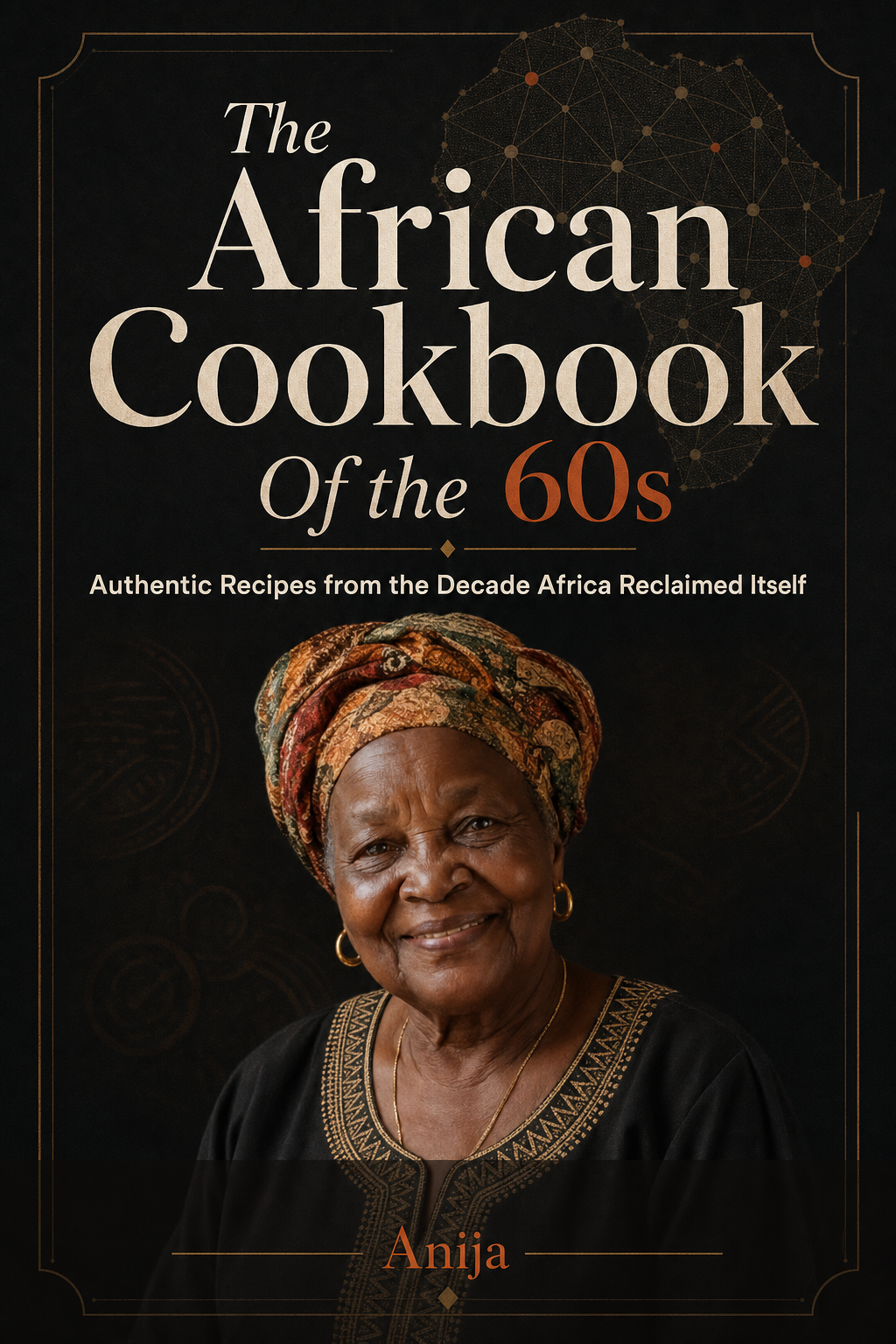
The African Cookbook of the 60s — book cover

   •   WEST AFRICAN FIRE POTS    •    FERMENTED SAVANNA GRAINS    •    SAHEL GRILLING TRADITIONS    •    EAST AFRICAN SPICE BLENDING    •    INDEPENDENCE-ERA FEAST DISHES    •    NORTH AFRICAN FLATBREADS    •    FRESHWATER & COASTAL SEAFOOD    •    SOUTHERN AFRICA PLANT COOKING    •    BROTHS THAT FED A CONTINENT    •    9 CHAPTERS    •    12 COUNTRIES DOCUMENTED    •    1960s ONLY    •       •   WEST AFRICAN FIRE POTS    •    FERMENTED SAVANNA GRAINS    •    SAHEL GRILLING TRADITIONS    •    EAST AFRICAN SPICE BLENDING    •    INDEPENDENCE-ERA FEAST DISHES    •    NORTH AFRICAN FLATBREADS    •    FRESHWATER & COASTAL SEAFOOD    •    SOUTHERN AFRICA PLANT COOKING    •    BROTHS THAT FED A CONTINENT    •    9 CHAPTERS    •    12 COUNTRIES DOCUMENTED    •    1960s ONLY    •   
The African Cookbook of the 60s
100+ Pages

Ebook / PDF / Instant Download

The African Cookbook of the 60s

Cook the Decade That Rebuilt a Continent — and Reclaim Your Table

$34 $14 SAVE $20

What you get:

The everyday pots of West Africa — the fire-side recipes that fed households from Lagos to Dakar before any cookbook existed.
The fermented staples of the Savanna — grain preparations that gave the 1960s kitchen its depth, and nearly vanished from diaspora cooking entirely.
East African spice blending — the grinding and layering methods passed between women, never written down, reconstructed here for the first time.
Freshwater and coastal seafood of the 1960s — what the rivers and coastlines gave before industrial fishing changed everything.
North African flatbreads made without an oven — griddle techniques from Morocco to Sudan that predate the modern kitchen by centuries.
The independence-era feast table — dishes served at celebration dinners across newly sovereign nations in the 1960s, documented from living memory.
Yes — I Want This Book for $14

30-Day Money-Back Guarantee  •  Instant Download  •  PDF Format


9 Chapters

What's waiting inside

Every chapter is a region. Every recipe is a year. Every page is a piece of the 1960s that was nearly gone.

01

Fire and Salt: The Everyday Pots of West Africa

The meals that nobody thought to write down because everyone already knew them. Here, they are written down.

02

The Grain and the Ground: Fermented Staples of the Savanna

Fermentation is not a technique. In the 1960s Savanna kitchen, it was a whole philosophy of time and patience. This chapter recovers it.

03

Smoke and Ember: Grilling Traditions Across the Sahel

Open fire cooking in the Sahel was not improvisation. It was precision — and the cuts, timings, and wood choices used in 1965 are documented here.

04

The Spice Keeper: Blending and Grinding in East African Kitchens

Every East African kitchen had its spice keeper — usually a woman. This chapter is her manual, reconstructed from living memory.

05

Slow Water: Soups and Broths That Fed a Continent

A broth that took six hours. A soup that fed twelve. These were not recipes for convenience — they were acts of commitment. Here is how to make them.

06

What the River Gives: Freshwater and Coastal Seafood of the 1960s

Before commercial fishing fleets arrived, the rivers and coasts gave something specific. This chapter names it — and shows you how to cook it.

07

The Vegetable Garden and the Bush: Plant-Forward Cooking of Southern Africa

Southern Africa's plant cooking was not a backup to meat. In the 1960s, it was the main event — and these preparations prove it.

08

Bread Without an Oven: Flatbreads and Griddle Cakes of North Africa

Griddle bread from Morocco to Sudan, made on surfaces that have not changed in 60 years. The recipes still work. The method is all here.

09

The Celebration Table: Feast Dishes of Independence-Era Africa

Ghana, 1957. Nigeria, 1960. Senegal, 1960. Kenya, 1963. What was served at the tables when a nation became free? This chapter tells you — and shows you how to set that table again.

Get All 9 Chapters — $14

The decade nobody documented

You can find jollof rice on 200 food blogs. You cannot find the jollof rice that was served at an independence dinner in Lagos in 1965 — until now. That is not a small distinction. That is the entire reason this book exists.

Nairobi, 1963. Dakar, 1960. Accra, 1957. In each of these cities, in the years when flags changed and borders were redrawn, women were cooking. Not for history. Not for any cookbook. For the people at the table. Your grandmother did not write this down — but it existed. It was real. It had specific ingredients and specific timings and specific smells. That knowledge lived in hands, not pages. And the women who held it are aging.

I am Anija. I did not set out to write a history book. I set out to recover something I felt slipping away in my own kitchen — the specific taste of a decade I had only heard about. What I found, when I started asking questions and tracing recipes back to their sources, was that no one had taken the 1960s as a single, unbroken culinary focus. Food historians touched it. Travel writers mentioned it. Nobody sat down with it for the length of time it deserved.

"Some meals carry a whole people's memory in them. This book is not for people who want quick weeknight dinners. It is for people who understand that."

So I did what needed doing. 9 chapters. 12 countries. 47 dishes documented from living memory and archival sources. The 1960s, complete. At $14, this is not a price that needs defending — it is simply the easiest decision your kitchen will ask you to make.
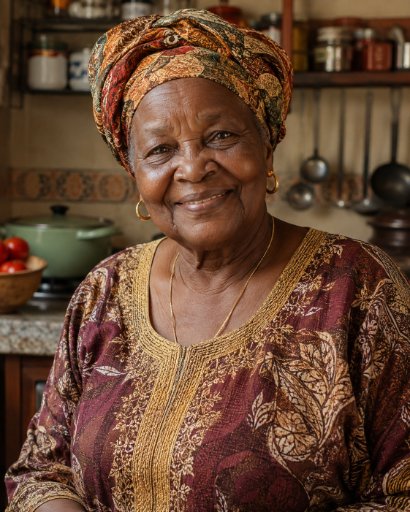
Anija — author of The African Cookbook of the 60s

The Author

Anija

Food heritage researcher and author. She spent years tracing 1960s African recipes back to their origins — not to write history, but to make it cookable.


Launch Pricing Ends In

After this, the price goes back to $34

00 Hours
:
00 Minutes
:
00 Seconds

The real urgency is not the price. It is that the last generation who cooked these meals from memory is aging. This decade is not being documented anywhere else at this level of specificity.

Claim Your Copy — $14 Today

What it actually costs you to skip this

The math is not about money.

If you do nothing

The 1960s recipes stay unrecorded. The generation who held them ages. In 20 years, asking your aunt to remember a dish she cooked in 1968 yields fragments and approximations.
You keep making the generic version — the one from a food blog written by someone who has never been to Nairobi.
Your table remains disconnected from the decade that gave your heritage its shape.
Cost: everything that matters. Price: $0.

With this book

47 dishes from 12 countries, documented from the 1960s. Real recipes. Real context. Not approximations.
The specific fermented fish paste used in a 1965 Senegalese kitchen. The exact grinding method from an East African spice keeper. The flatbread made the way it was made in 1963 Sudan.
Your table becomes a place where that decade is still alive — where cooking is an act of memory, not just nutrition.
Cost: $14. Once. No subscription. No upsell.
Get the Book for $14

Composite reader reflections — representative of the experiences this book creates

What readers are saying

"I grew up hearing my mother talk about the pots she cooked from in Lagos in the late 1960s. I always assumed those recipes were just... gone. Chapter one of this book — the West African everyday pots — has specific techniques I have never seen documented anywhere. I made the palm oil stew on a Sunday and cried at the table."

TN

Taiwo N.

Second-generation Nigerian-British home cook

"The chapter on East African spice blending is worth the entire price alone. I teach food history at the community level and I have spent years looking for something this specific. The grinding methods, the sequences, the regional variations inside Kenya and Tanzania — all of it, in one place. Anija clearly did not take shortcuts with this research."

AK

Amara K.

Food heritage educator, Atlanta

"I cooked the independence-era feast dishes from chapter nine for my family's Ghanaian heritage dinner. My aunt — who was born in 1955 — sat down, tasted the groundnut soup, and said 'this is how it was.' That sentence. I will not forget that. This book gave me something I did not know I was missing."

OB

Osa B.

Ghanaian-American, food enthusiast, Chicago


Our Promise
30-Day Money
Back
Guarantee

Try it for 30 days. If it is not right for you, you pay nothing.

You have 30 full days from the moment you download this book. If for any reason it does not meet your expectations — if the recipes do not work in your kitchen, if the historical context does not resonate, if anything falls short of what was promised here — send one email. You get every dollar back. No questions. No forms. No waiting period.

The only risk here is staying on the wrong side of a $20 decision.

Get the Book — Protected by 30-Day Guarantee

Questions you might have

What exactly do I get?
A 100+ page PDF ebook, delivered to you instantly after purchase. No shipping, no waiting. You download it once and it is yours — on every device you own, permanently. The PDF includes all 9 chapters, every recipe, and the historical context that makes each dish make sense.
What if it is not for me?
Then you get your money back. All of it. Within 30 days of purchase, for any reason or no reason. One email is all it takes. This is a straightforward guarantee with no fine print and no questions asked.
I am not of African descent. Is this book still for me?
Yes. This book is for anyone who understands that some meals carry a whole people's memory in them — and wants to cook from that place. Food heritage does not require ancestry; it requires attention and respect. If you have that, this book will reward you.
How specific is the historical context? Is this mostly recipes, or mostly history?
Both, woven together. Every recipe comes with the story of where it was cooked, who cooked it, and what was happening in that part of Africa in the 1960s. You will not find disconnected instructions here. You will find dishes that mean something — and the specific reason they mean it.
The ingredients sound obscure. Can I actually make these in a modern kitchen?
Most ingredients in this book are available in any African grocery store and many international markets. Where a specific ingredient has become genuinely hard to source, Anija notes the closest substitution — while being honest about what is lost with it. This book does not pretend everything is easy to find. It tells you the truth, then gives you options.
Why $14? What is the catch?
There is no catch. This is a launch price to put the book into as many kitchens as possible, as quickly as possible — because the recipes inside are time-sensitive in a way that has nothing to do with marketing. The generation who cooked these dishes from memory is aging. At $14, this decision takes 10 seconds. After the launch period, the price returns to $34.

A note from Anija —

The 1960s will not wait. Neither should you.

"I wrote this book because I realized I was the person who had to. Not because I was the most qualified. Because the alternative was that nobody did."

Get Your Copy — $14

30-Day Guarantee  •  Instant PDF Download  •  Was $34

The African Cookbook of the 60s
$34   $14 today  •  Save $20
Get It — $14
30-Day Money
Back

Wait — you are fully protected.

If you read this book and it does not deliver what was promised here, you pay nothing. 30 days. Full refund. One email. No argument.

The only question is whether you want to spend the next 30 days cooking from a decade that almost no one has documented — or not.

Yes — Get the Book for $14

30-Day Guarantee  •  PDF  •  Instant Download  •  Was $34